At The Womac Law Firm, we have spent more than 30 years handling serious vehicle crash cases across Louisiana, including complex claims where phone use and in-app distraction played a key role. We know how insurers and rideshare companies try to minimize that distraction, and we know that Uber and Lyft data, phone records, and careful investigation can reveal a very different story. In this article, we explain how in-app distraction really works, how it causes crashes, and what that can mean for your claim after a rideshare accident.
Why In-App Distraction in Uber & Lyft Is Different From Ordinary Phone Use
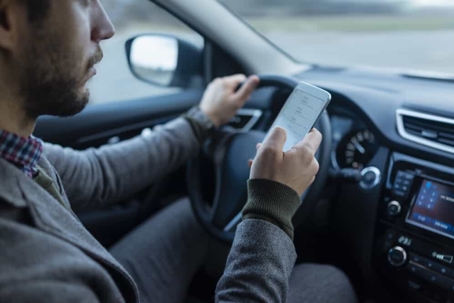
In-app distraction in rideshare driving comes from the way Uber and Lyft are designed to keep drivers continuously interacting with their phones while on the road. Unlike casual phone use, these apps actively demand attention through alerts, navigation updates, and time-sensitive requests, creating multiple overlapping sources of distraction.
- Visual distraction
- Manual distraction
- Cognitive distraction
- Time-pressure distraction
- Notification-triggered distraction
- Economic-pressure distraction
How A Split-Second App Glance Turns Into A Serious Rideshare Crash
Who Is Really Responsible When The Uber App Distracts The Driver?
Evidence That Can Prove In-App Distraction After A Rideshare Crash
Rideshare crashes can involve more than just driver “inattention” claims because app activity leaves digital traces. Uber and Lyft maintain trip records such as pickup and drop-off times, route data, and timestamps for key actions like ride requests, acceptance, cancellations, and in-app messages. Comparing these logs with the exact time of the crash can help show whether the driver was interacting with the app, such as responding to a new ride request or notification at a critical moment.
Additional evidence can come from phones, devices, and witnesses. Phone and carrier data may show when the app was active, screen usage, or data activity around the crash time, helping build a timeline of distraction. Dashcam footage and passenger or witness statements can also confirm behaviors like looking down at a phone or reacting to app alerts. Because this type of data can be deleted or overwritten, preservation requests are often needed early to secure it.
How Insurers and Rideshare Companies Try To Spin In-App Distraction
What Injured Riders and Other Drivers Should Do After A Suspected In-App Distraction Crash
How The Womac Law Firm Builds Rideshare Cases Involving In-App Distraction
- Building a rideshare in-app distraction case requires more than claiming phone use
- Combining multiple evidence sources into a clear timeline (passenger accounts, police reports, medical records, trip data, phone records)
- Identifying how app interactions may have diverted driver attention from the road
- Gathering driver, passenger, and witness observations about what happened before the crash
- Obtaining Uber/Lyft trip data, receipts, route details, and available media (photos/videos)
- Using technical or industry professionals to interpret digital records and reconstruct events
- Analyzing how rideshare app design and notifications may contribute to distraction
- Preparing evidence with an eye toward how a jury may understand complex app-based behavior
- Using mock jury testing and trial preparation to evaluate case presentation strategies
- Presenting evidence in a clear, narrative timeline that connects app activity to the crash
- Preparing cases for trial to strengthen settlement negotiations with insurers
- Focusing on client impact, including injuries, medical care, and financial losses
- Providing ongoing guidance and communication throughout the legal process
- Positioning the case against insurers and rideshare companies rather than the injured person
Talk With A Louisiana Attorney About An Uber Or Lyft In-App Distraction Crash
In-app distraction in Uber and Lyft vehicles is not just an annoyance; it is a predictable source of danger that can be traced through the data these platforms create every day. When a driver’s attention is pulled away by constant pings and prompts on Louisiana streets and highways, the consequences fall on passengers and other motorists who did nothing wrong. You do not have to accept a simple driver error explanation if the facts point to a deeper problem with how the trip was run through the app.